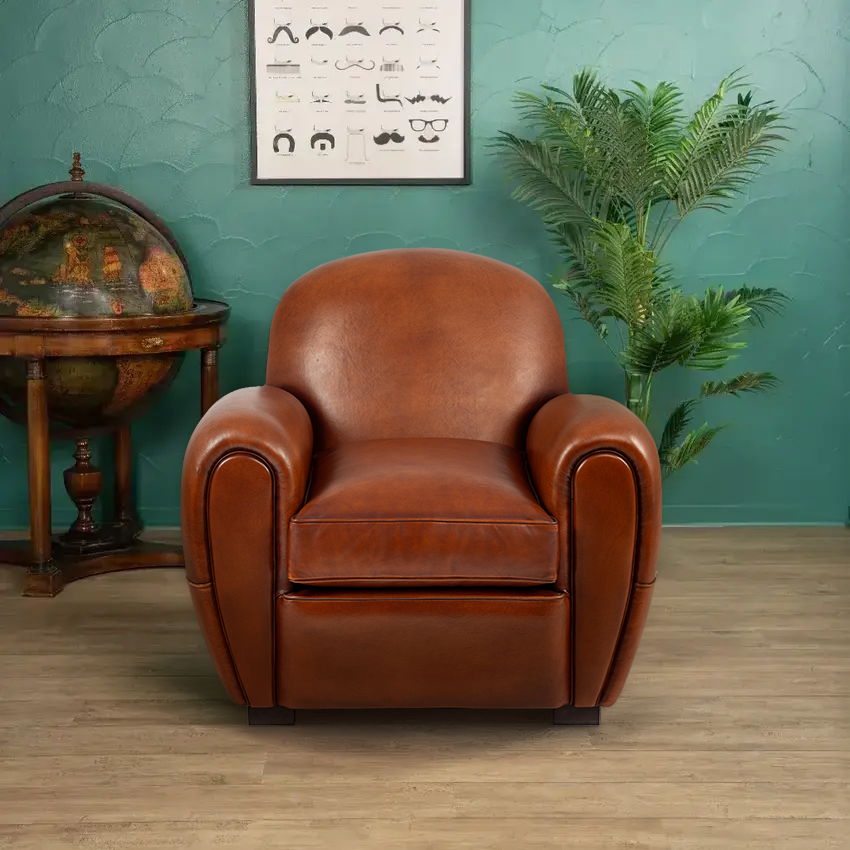

Why choose the right Club Chair?
What size Club Chair should you choose?
First step: measure your available space, and above all allow room to move around the chair. A Club Chair needs to “breathe”. Ideally, allow 60 cm of clearance around it.
Standard dimensions: useful guidelines
- Width: 80 to 95 cm
- Depth: 75 to 95 cm
- Height: 70 to 85 cm
Small living room: how to avoid the “block” effect
If your room is compact (or if you want a discreet reading corner), choose a straighter, shallower model (e.g. Bridge), with a visually lighter shade (cognac, honey).
Large space: embrace depth and presence
In a spacious living room or office with room to spare, a deeper seat and enveloping silhouette (Half-Moon, classic Club) instantly create a “private club” atmosphere.
Which leather should you choose for a Club Chair?
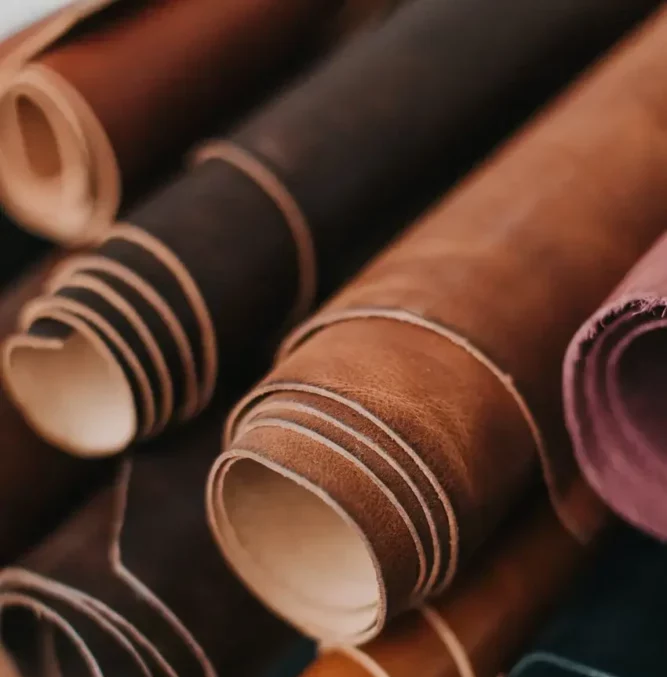
Leather is the most visible element — but also the one that most determines longevity and patina. Good leather “lives”: it gains depth, develops subtle marks, and warms with time.
Full-grain leather: the premium choice
Full-grain leather keeps the natural surface intact. It generally develops the finest patina over the years. Expect subtle variations: this is normal — and desirable.
Sheepskin leather: the traditional Club spirit
Sheepskin leather has historically been associated with Club Chairs: supple, comfortable, and ideal for developing patina.
Pigmented leather: practical and more uniform
More protected and often more even in appearance. Advantage: easier care. Drawback: sometimes a less rich, less lively patina.
Tanning: vegetable or chrome?
Vegetable tanning (more traditional) is often linked to a more natural patina. Chrome tanning is faster and more industrial. In all cases, what matters most is leather quality and how it suits your use (daily intensive use vs occasional lounge piece).
👉 Which full-grain leather should you choose for a Club Chair?
How do you recognize an authentic Club Chair?
Not every rounded leather chair is a true Club Chair. Authenticity lies in the frame, suspension, build quality and finishing details.
1) A solid wood frame
This is the foundation. Solid wood (often beech) provides rigidity, stability and longevity. Composite frames age poorly.
2) Reliable, durable suspension
Webbing, springs… these create comfort and help prevent sagging. A chair that feels too soft from day one is not always a good sign.
3) A true Club signature
- Generous armrests, rounded lines
- Relatively low, enveloping backrest
- Balanced proportions (not too high, not too slim)
What comfort level should you choose?
Comfort depends first on how you use it: reading, conversation, relaxation, or as a statement chair in an office. Then it comes down to padding and seat depth.
Padding: firm, balanced or soft?
- Firm: supportive, more upright posture (often preferred in offices)
- Balanced: the best compromise for everyday use
- Soft: cocooning feel, ideal for relaxing (provided the quality prevents sagging)
Seat depth: the detail that changes everything
A shorter seat (≈ 50–55 cm) encourages an active posture. A deeper seat (≈ 60 cm and more) invites long, comfortable sitting.
👉 To make the right comfort choice, browse our Club Chair comfort guide
Which Club Chair shape should you choose?
Shape influences both style and function. Here are the 3 main families most commonly found.
Bridge Club Chair: compact and versatile
Straighter lines, often more city-friendly. Perfect for small living rooms, pairs of chairs, or an office.
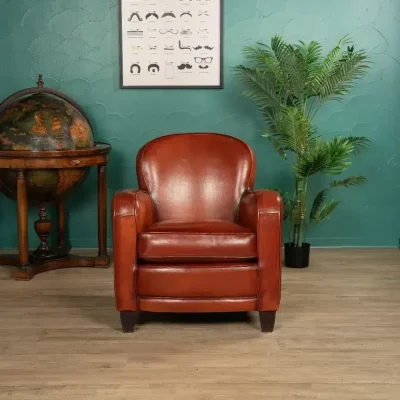
The small Bridge club armchair in cognac full-grain leather.
Half-Moon Club Chair: enveloping, Art Deco spirit
More pronounced curves, stronger presence. Perfect for spacious lounges, fireplace corners, sophisticated interiors.
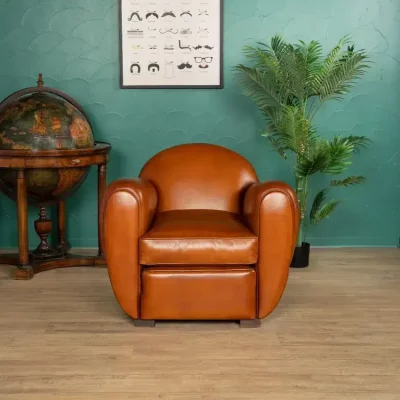
The Jules French luxury leather club chair in honey full-grain.
Straight-Back Club Chair: structured and timeless
A more classic, more architectural look. Ideal for interiors that need to remain elegant and understated.
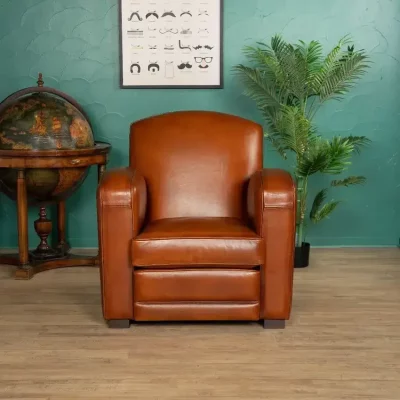
The Grand Carré leather club armchair in Havana sheepskin.
Astuce : if you hesitate between two shapes, choose according to use: reading/relaxation (more enveloping) vs conversation/office (straighter).
What budget should you plan for a quality Club Chair?
Price mainly depends on: leather, frame, suspension/padding quality, finishing level and manufacturing method (industrial vs handcrafted).
Price guidelines (indicative)
| Criteria | Entry Level | High-End Handcrafted |
|---|---|---|
| Frame | often composite | solid wood |
| Leather | often corrected/pigmented | full-grain / noble patina |
| Comfort over time | possible sagging | lasting support |
| Lifespan | 5–10 years (variable) | 20–40 years (with care) |
| Budget | ≈ €600–900 | ≈ €2,000+ |
Our recommendation based on your profile
- Small room: compact Bridge + light leather (cognac/honey)
- Authenticity lover: full-grain / sheepskin leather + natural patina
- Office: straight-back + firmer comfort
- Spacious lounge: Half-Moon + deeper seat
Where should you buy your Club Chair?
Three main options:
- Mass retail: attractive prices, highly variable quality.
- Specialists: better product consistency + expert advice, a strong balance.
- Craftsmanship / bespoke: higher investment, superior durability and premium finishes.
Ideally: test the seat if possible (or ask for precise advice based on your use, space, build and interior style).
Mistakes to avoid when buying
- Choosing only from photos (without checking dimensions and seat depth)
- Choosing leather that looks too “perfect” (often corrected/plastic-coated)
- Confusing “soft” with “comfortable”: long-term support matters
- Forgetting circulation space around the chair
- Comparing only price (without comparing frame, suspension and finishes)
FAQ – Everything to know before buying a Club Chair
What is the best leather for a Club Chair?
In general, full-grain leather (or quality sheepskin leather) offers the richest patina and excellent durability. The best choice also depends on use: intensive daily use = more resistant leather, reception room = more characterful leather.
What size Club Chair for a small living room?
Choose a compact model such as a Bridge chair, with moderate depth. Measure your room and keep around 60 cm of circulation space.
How do you recognize an authentic Club Chair?
Check for: solid beech frame, quality suspension (webbing/springs), neat finishes, and classic Club proportions (rounded arms, low backrest).
Club Chair: firm or soft comfort?
For office use or conversation: firmer is often better. For reading or relaxation: softer comfort works well, provided the suspension and padding remain supportive over time.
Which Club Chair is best for reading?
A deeper seat and a more enveloping shape (Half-Moon or classic Club style) are generally better suited for long reading sessions.
What budget should you expect for a quality Club Chair?
Prices vary according to leather, frame and craftsmanship. A handcrafted high-end model often exceeds €2,000 but can last 20–40 years with proper care.
Does a Club Chair ever go out of style?
No. It is an iconic and timeless piece that works across interiors, especially when the materials are beautiful and the proportions balanced.