Comfort is undoubtedly the number one criterion when choosing a Club Chair. But be careful: not all Club Chairs offer the same level of seating comfort, support, or overall feel.
Between seat cushion density, seat depth, padding quality, and the presence of suspension, several factors come into play to guarantee lasting comfort and avoid unpleasant surprises.
In this complete guide, discover how to choose a truly comfortable Club Chair, suited to your body shape, your lifestyle, and your expectations in terms of well-being. For a broader overview of buying criteria, also explore our complete guide to choosing the right leather Club Chair.
Why Is the Comfort of a Club Chair So Important?
A Club Chair is not just a decorative piece of furniture. Above all, it is a seat designed to welcome the body, provide genuine relaxation, and accompany everyday moments: reading, conversation, rest, or occasional work.
A poorly designed chair can quickly become uncomfortable: poor back support, a seat that is too hard or too soft, tired legs, or bad posture. On the other hand, a good Club Chair provides an enveloping feel, balanced support, and comfort that remains pleasant over time.
The Essential Criteria for Optimal Comfort
1. Seat Depth
Seat depth directly influences body position.
- Deep seat (55 cm or more): ideal for relaxing and lounging for long periods
- Medium seat (50 to 55 cm): versatile and comfortable for most uses
- Shorter seat (less than 50 cm): more upright, but often less relaxing
If you are tall, a deeper seat is often preferable. Conversely, a shorter person may feel better supported in a slightly shallower chair. To refine this point, also read our guide on Club Chair dimensions.
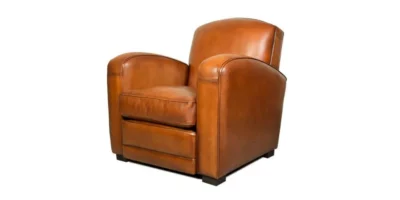
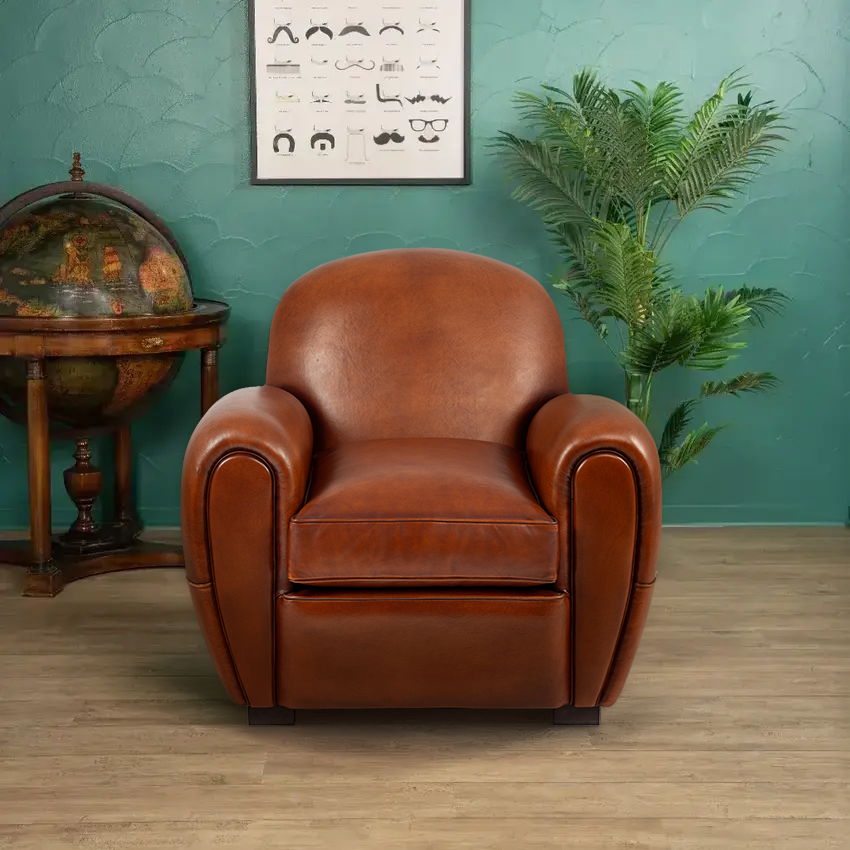
Grand Carré Club Chair model with deep seat
2. Seat Height
Seat height plays an important role in leg comfort and ease of getting up.
A good Club Chair should allow your feet to rest flat on the floor, without knees sitting too high or too low. In general, a seat height between 40 and 45 cm is a good benchmark.
3. Seat Firmness
Firmness is one of the most decisive elements in overall comfort.
- A seat that is too soft may feel pleasant at first, but quickly sags and tires the back
- A seat that is too firm lacks softness and may become uncomfortable over time
The right balance is usually a welcoming seat that still provides support. This combination creates the characteristic comfort of a Club Chair.
4. Backrest and Back Support
The backrest should naturally follow the shape of the back, without forcing the body to compensate.
A good Club Chair backrest should:
- support the lower back
- support the upper back
- offer a slight recline ideal for relaxation
Enveloping shapes are often the most comfortable for lounging, while straighter lines are better suited to a more upright sitting position. If you are hesitating between several silhouettes, explore our page dedicated to the different Club Chair styles.
5. Armrests
Armrests fully contribute to overall comfort. They help relax the arms, release shoulder tension, and reinforce the cocooning feeling of the seat.
Wide, well-positioned, and slightly angled armrests generally provide more comfort than a design that is too rigid or too narrow.
The Quality of the Padding: A Key Point
The Club Chair padding lies at the heart of comfort. It determines the welcoming feel, durability, and the chair’s ability to maintain the right balance between softness and support.
High-quality padding helps prevent seats that flatten too quickly, backrests that lose their shape, or armrests that become soft and uneven.
Main Types of Padding
- High-density foam: offers a good compromise between comfort, support, and durability
- Vegetable or animal horsehair: used in more traditional craftsmanship, offering excellent resilience
- Feathers or soft blends: very comfortable at first touch, but cushions flatten and do not fully recover their original shape
- Material combinations: foam + batting + horsehair, often interesting for combining softness and support
Ideally, it is better to choose a chair whose padding was designed to last. A good Club Chair should not only feel pleasant when new: it should remain comfortable after years of use.
How to Recognize Good Padding
- the seat returns to shape after use
- comfort remains stable, without hollow spots
- the backrest supports without collapsing
- the armrests keep their structure
A chair that feels too light, too soft, or visibly lacking density is often the sign of lower-quality padding.
With or Without Suspension: What Should You Choose?
Suspension is often overlooked, yet it strongly influences the comfort of a Club Chair. It sits beneath the seat and acts as a cushioning base, improving softness, support, and longevity.
Why Is Suspension Important?
A comfortable seat does not depend only on the visible cushion or padding. What lies underneath matters just as much. Good suspension helps:
- distribute body weight more evenly
- improve seat elasticity
- limit premature sagging
- reinforce long-term comfort
Club Chairs with Suspension
A Club Chair fitted with well-designed suspension often offers a softer, more balanced, and more durable seat. Common systems include:
- elastic webbing
- springs in more traditional or premium constructions
This type of construction is particularly interesting if you are looking for frequent use or long-lasting comfort.
Club Chairs without Suspension
Some Club Chairs rely mainly on a rigid base with springs built into the frame beneath the seat. They often provide less softness because they are designed with more limited vertical movement, but they offer firmer support.
Our Advice
For genuine Club Chair comfort, it is generally better to choose a model with suspension. It may be discreet visually, but it is fundamental to seat quality and long-term durability.
Different Types of Comfort Depending on the Model
Not all Club Chairs offer the same feeling.
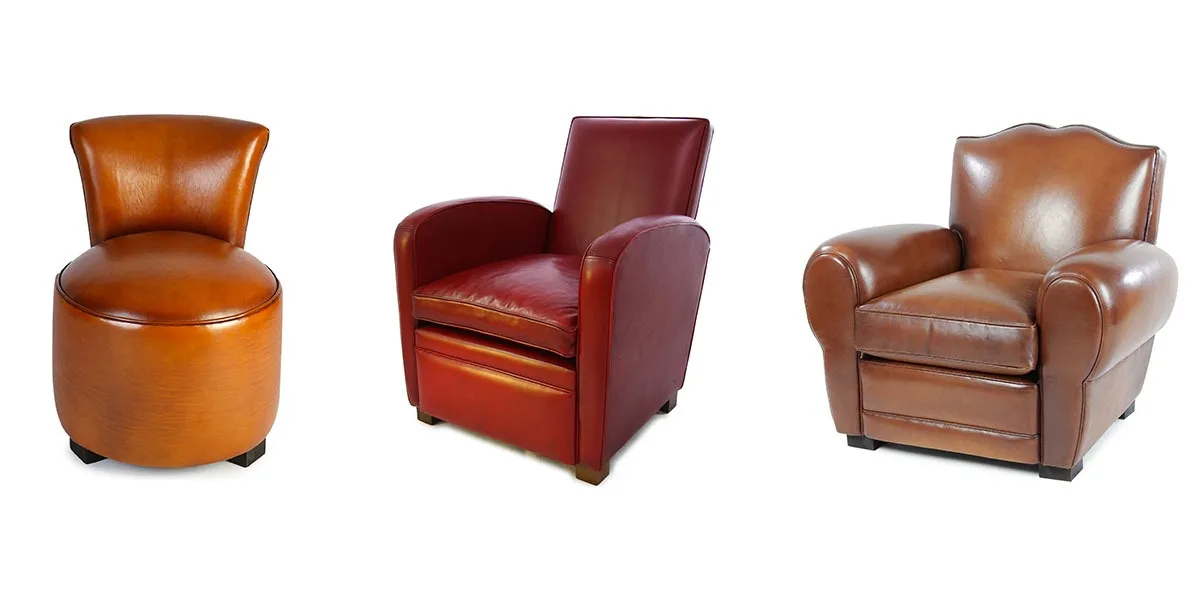
- Moustache Club Chair: very enveloping, appreciated for its generous comfort
- Jules Club Chair: combines support and cocooning comfort
- Grand Carré Club Chair: straighter, with firmer and more structured comfort
- Emile Club Chair: often deeper, well suited to long relaxation sessions
The right model therefore depends on the type of comfort you are seeking: dynamic support or a more enveloping seat. You can discover these different lines in our collection of leather Club Chairs.
Adapt Comfort to Your Body Shape
A chair that feels comfortable for one person may not suit another. Height, weight, and posture directly influence comfort perception.
- Tall person: choose a deep seat and good back support
- Shorter person: choose a shallower seat to keep the back properly supported
- Daily use: choose quality materials and balanced support
The best Club Chair is therefore the one that matches your body as much as your interior style.
Adapt Comfort to Your Lifestyle
Before choosing, ask yourself one simple question: how will you use your Club Chair every day?
- For reading or relaxing: choose a welcoming seat, slightly reclined backrest, and comfortable armrests
- For a reception room: balanced comfort will work best
- For a more upright or active use: choose a firmer seat and stronger support
A Club Chair should not be chosen only for its appearance, but first for the way you will actually use it.
Does Leather Really Influence the Comfort of a Club Chair?
Yes, leather plays an important role in the overall feeling. It does not affect the internal structure of the seat, but it influences touch, flexibility, and perceived quality.
High-quality leather generally offers:
- a softer and more pleasant touch
- better breathability
- a warmer feeling
- flexibility that improves positively over time
Full-grain sheepskin leather is particularly appreciated for these qualities.

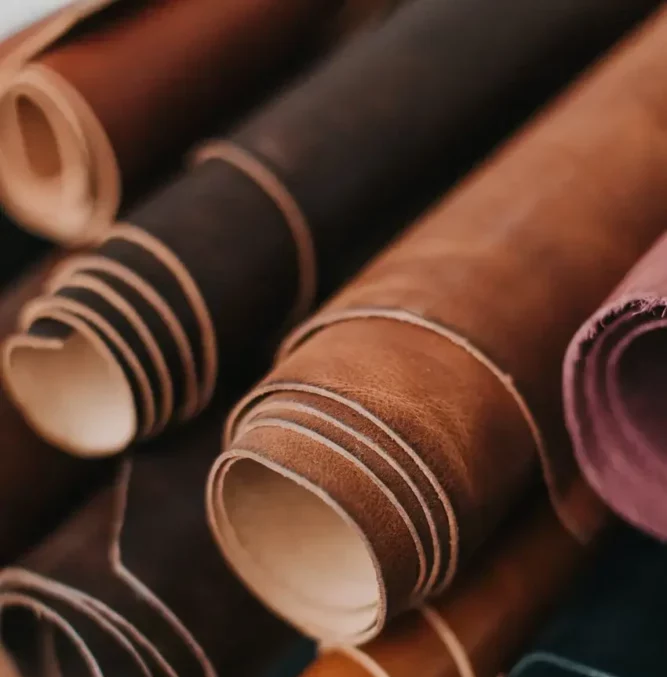
Full-grain sheepskin leather hide
Comfort and Durability: An Inseparable Duo
Good comfort must last over time. A chair that feels great at first but sags after a few months is not truly a good choice.
To combine comfort and durability, it is better to prioritize:
- a solid wood frame, often beechwood
- a quality suspension system
- serious, well-proportioned padding
- high-quality leather, softer and more pleasant to the touch
To preserve these qualities over time, also consult our guide on how to care for a leather Club Chair.
Antique or Recent Club Chair: Which Is More Comfortable?
It all depends on build quality and the condition of the chair.
A beautifully made antique Club Chair can offer remarkable comfort if it has kept—or regained:
- a sound frame
- good padding
- functional suspension
A well-designed modern model can also provide excellent comfort thanks to modern materials and serious craftsmanship.
In the end, the age of the chair matters less than the quality of its design.
Mistakes to Avoid
- Choosing only based on style without checking real comfort
- Confusing a very soft seat with true lasting comfort
- Ignoring padding quality
- Forgetting the importance of suspension
- Choosing a chair unsuited to your body shape
- Not considering the main intended use
The Ultimate Test Before Buying
If you have the chance to try the chair before buying, take time to test it properly.
- Sit for at least 10 minutes
- Check lower back support
- Try several sitting positions
- Observe whether the seat remains stable and comfortable
- Evaluate how easy it is to stand up
A good Club Chair makes you want to stay seated, while still giving the body a natural feeling of support.
Discover Our Sheepskin Leather Club Chairs
Choosing the right comfort also means choosing a chair designed to last. At My Club Chair, each model is crafted with selected materials to offer a lasting balance between support, softness, and elegance.
Depending on your preferences, you may choose:
- enveloping models for relaxation
- firmer seats for stronger support
- compact or generous sizes depending on your space
Discover our collection of sheepskin leather Club Chairs and find the comfort that suits you.
In Summary
Choosing the comfort of your Club Chair means considering much more than appearance. Seat depth, height, firmness, padding quality, suspension, and adaptation to your body shape are all essential criteria.
A truly comfortable Club Chair is one that finds the right balance between softness, support, and durability. By taking the time to evaluate these elements, you greatly increase your chances of choosing a chair that is as beautiful as it is enjoyable to live with every day.
FAQ – Everything You Need to Know to Choose the Comfort of Your Club Chair
Which Club Chair is the most comfortable?
The most enveloping models, such as the Moustache Club Chair or certain Bergère-style Club Chairs, are often considered the most comfortable for relaxation. That said, the best choice still depends on your body shape and how you plan to use it.
What foam density should I choose for a comfortable Club Chair?
High-density foam is generally the best option for proper support and better durability over time. Foam that is too soft or not dense enough may cause the seat to sag more quickly.
Is traditional padding more comfortable than foam?
Traditional padding, such as horsehair, often offers excellent resilience and long-lasting comfort. Foam can also perform very well when it is high quality. The best choice depends on the level of finish you want and the type of craftsmanship you prefer.
Does suspension really make a difference in comfort?
Yes, suspension plays a major role in the comfort of a Club Chair. It improves seat flexibility, distributes body weight more evenly, and helps preserve comfort over time. A Club Chair with suspension often feels more balanced and more durable.
Can a Club Chair still be comfortable without suspension?
Yes, it can, but the seat will often feel firmer and may be less forgiving over time. Without suspension, more depends on the padding itself, which may compress faster depending on the materials used.
Does leather affect the comfort of a Club Chair?
Yes, leather influences the overall feel of the chair. A high-quality leather, softer and more supple, generally feels more pleasant to the touch and contributes to a warmer, more refined seating experience.
What type of seat is best for a tall person?
A tall person will usually feel more comfortable with a deeper seat and a backrest high enough to provide proper back support.
What type of seat is best for a shorter person?
A shorter person will often benefit from a slightly shallower seat, allowing the back to stay well supported while keeping the feet flat on the floor.
Should I choose a firm or a soft seat?
The ideal choice is usually a balance between softness and support. A seat that is too soft may lack structure, while a seat that is too firm can become tiring over time. The best comfort often comes from a seat that feels welcoming without collapsing.
Can a Club Chair be ergonomic?
Yes, provided it offers the right seat depth, good back support, well-positioned armrests, and a seat height suited to your body shape. Comfort and ergonomics can absolutely go together in a well-designed Club Chair.
How can I tell if a Club Chair will stay comfortable over time?
Long-term comfort depends mainly on the quality of the frame, the padding, the suspension, and the materials used. A well-made Club Chair keeps its balance of softness and support for much longer.
Is an antique Club Chair more comfortable than a modern one?
Not necessarily. A well-made antique Club Chair can be exceptionally comfortable, but only if it still has—or has regained—a sound frame, quality padding, and healthy suspension. A well-designed modern model can also provide excellent comfort.