The Club Chair in the 1930s: Toward Cleaner Lines
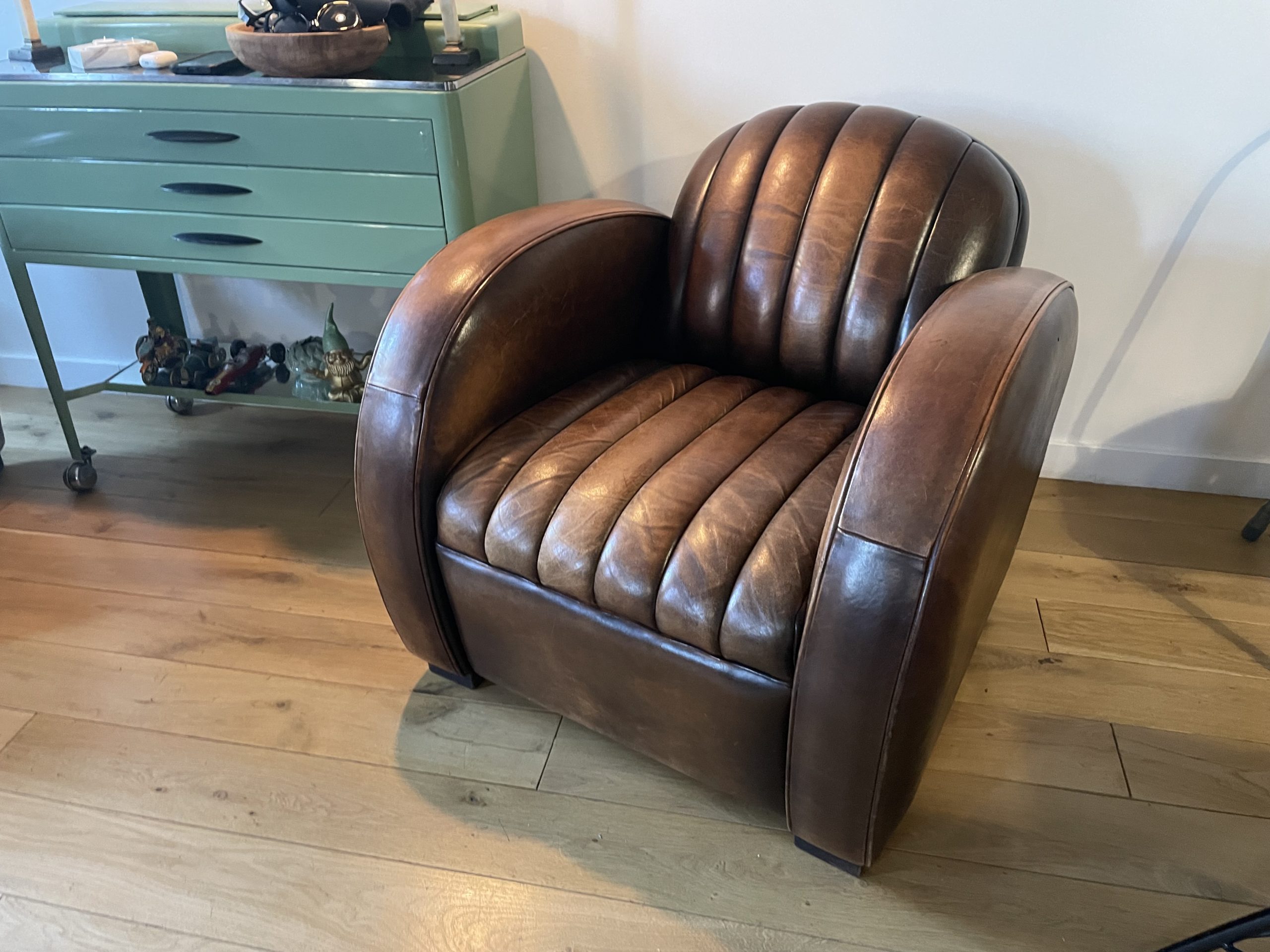
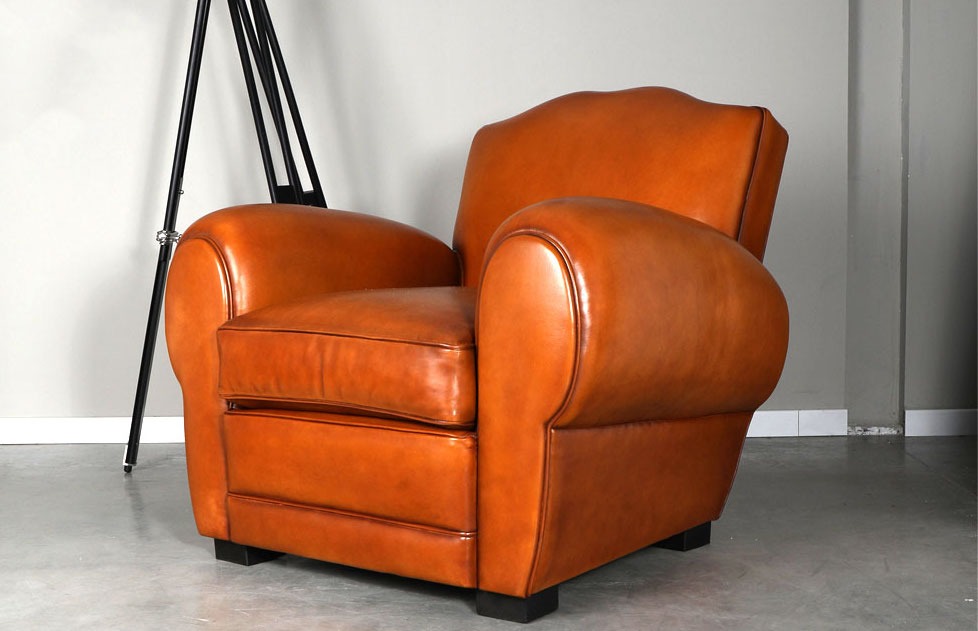
During the 1930s, the club chair evolved into a more balanced and visually lighter silhouette. Without sacrificing its generous comfort, many models adopted lines that were less bulky than those of earlier decades. The armrests became more structured, the backrest slightly more upright, and the overall design gained elegance.
This transformation reflected broader changes in interior design. Living spaces became more functional, brighter and more organized. Furniture therefore needed to combine comfort, presence and harmony. The club chair naturally found its place not only in private homes, but also in hotels, lounges and reception rooms. Some antique club chairs from this period are now especially sought after for their balance of authenticity and refinement.
Noble Materials, but an Evolving Manufacturing Process
Despite the economic pressures of the time, the club chair remained associated with noble and durable materials. Leather was still the preferred finish, appreciated for its strength, flexibility and beautiful aging over time. Traditional shades such as Havana brown, honey and warm tan remained dominant, although some workshops introduced deeper tones depending on style and use.
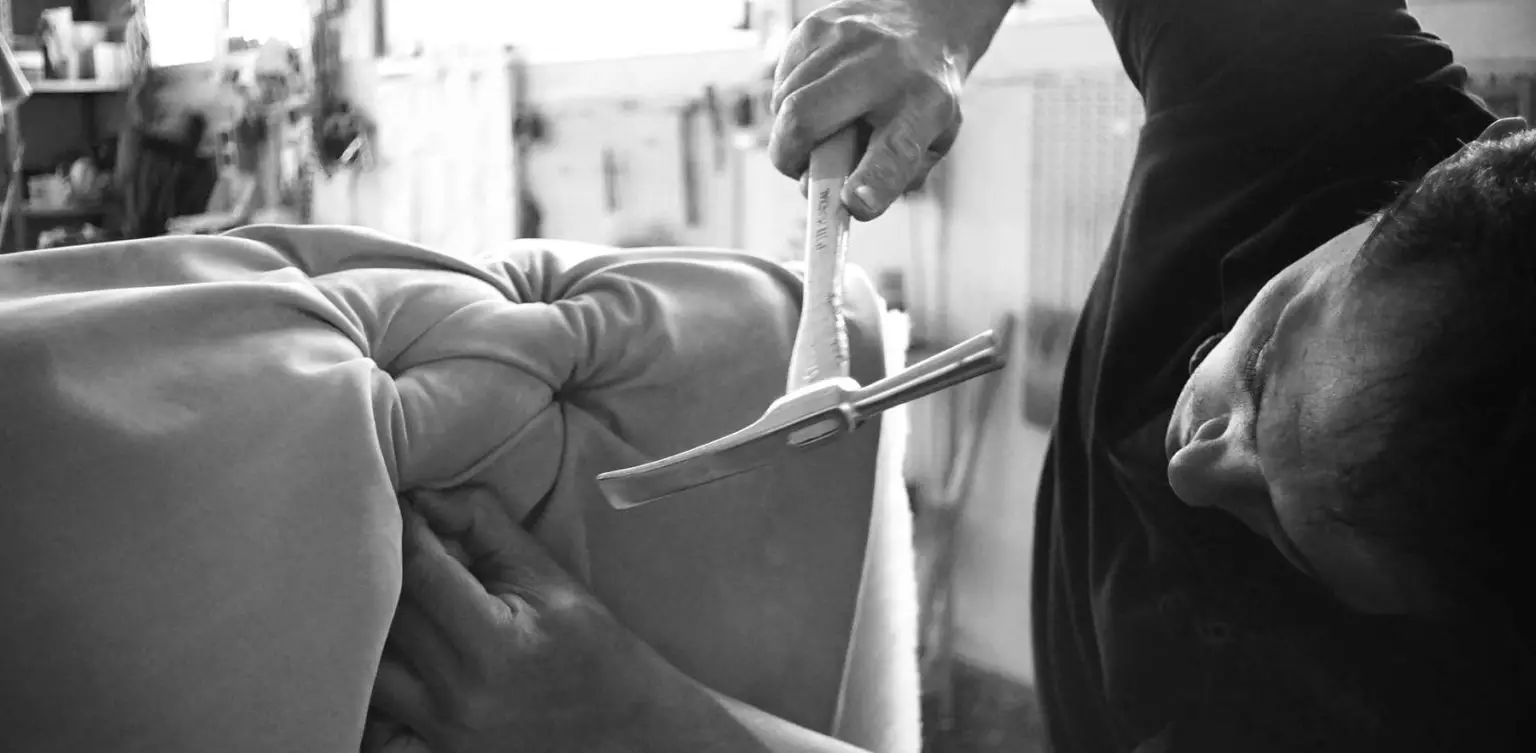
At the same time, craftsmen gradually adapted their methods. Some structures were simplified, decorative details became more discreet and efficiency began to influence production. This period clearly demonstrates the club chair’s ability to evolve without losing its character. Many vintage models can still regain their full beauty through professional club chair restoration.
The 1940s: Scarcity of Resources and Continuity of Style
The 1940s, marked by war and restrictions, greatly slowed furniture production. Like many household pieces, the club chair was affected by shortages of raw materials and supply difficulties. Models produced during this period often featured simpler finishes, cleaner lines or more restrained construction.
Despite these challenges, the club chair remained deeply associated with comfort, stability and warmth. Even in simplified versions, it kept its essential qualities: a welcoming seat, enveloping shapes and a reassuring presence in the home. This ability to preserve its identity during difficult times is part of what makes it so valuable today.
Post-War Years: A Transition Toward New Interpretations
After the war, the club chair gradually regained its place in interiors. It entered a transitional phase, balancing respect for classic models with adaptation to the new aesthetic expectations of the mid-20th century. Lifestyles were changing, interiors were evolving, and furniture had to answer a new relationship between comfort, practicality and style.
This continuity paved the way for more varied versions in later decades, while maintaining a strong connection to French craftsmanship traditions.
Why This Period Remains Essential in the History of the Club Chair
The 1930s and 1940s represent a pivotal stage in the evolution of the club chair. They show how this iconic seat adapted to changes in taste, economic crises and historical challenges without ever losing its identity. This dialogue between heritage and adaptation largely explains why the club chair remains a timeless reference in the world of character furniture.
Whether you are looking to acquire an antique club chair or restore a vintage piece, this period remains a major source of inspiration for lovers of fine furniture and authentic craftsmanship.
FAQ – Evolution of the Club Chair in the 1930s and 1940s
How did the club chair evolve in the 1930s?
In the 1930s, the club chair adopted cleaner, more balanced lines and became visually lighter. It kept its generous comfort while offering a more elegant silhouette suited to modern interiors.
Are 1930s club chairs sought after today?
Yes. Models from the 1930s are highly appreciated for their authenticity, handcrafted quality and timeless style. A well-preserved antique club chair from this era is considered a valuable decorative piece.
Why were the 1940s important for club chair production?
The 1940s were heavily affected by war and shortages. Limited access to raw materials led to simpler production methods, more restrained finishes and slower manufacturing overall.
Did the club chair remain comfortable during this period?
Yes. Even with production constraints, the club chair kept its deep seat, enveloping forms and long-lasting comfort, which had already made it famous.
What materials were used between 1930 and 1940?
Leather remained the preferred material, combined with a solid wood frame and traditional upholstery. Depending on the period, some adaptations were made according to available resources.
Can a club chair from this era be restored?
Absolutely. Many pieces from the 1930s and 1940s can regain their beauty through expert club chair restoration that respects the original materials and proportions.
How can you recognize an antique club chair from the 1930s or 1940s?
These models often feature a sturdy structure, thick leather, natural patina and harmonious proportions. Shapes vary by workshop and production date, but they always retain a warm and authentic presence.
Why is this period important in the history of the club chair?
The 1930s and 1940s were a turning point. They show how the club chair adapted to changing tastes and historical challenges while preserving its identity, which explains its lasting popularity today.