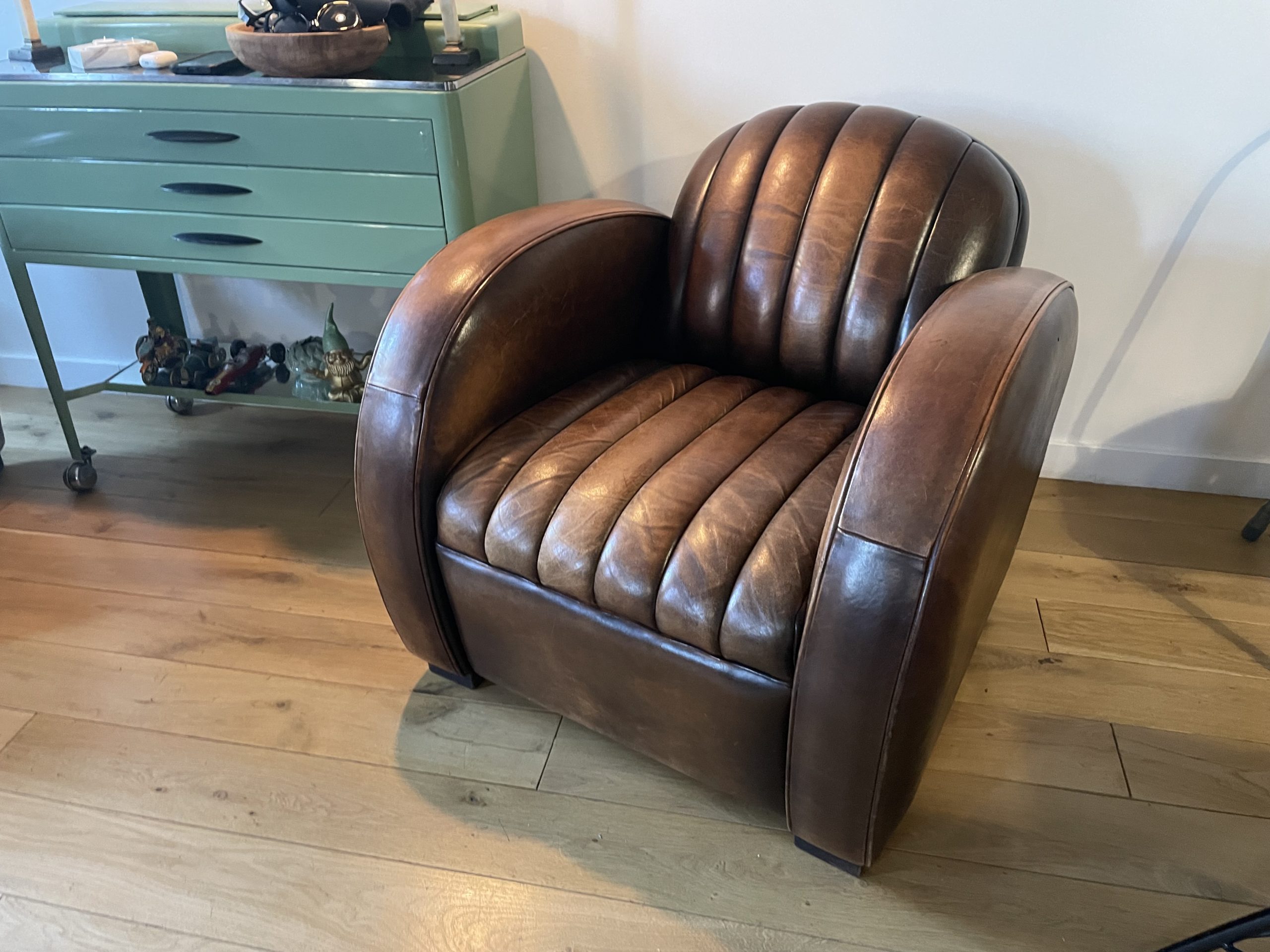
After its golden age in the 1930s and 1940s, the club chair entered a new phase between 1950 and 1970. Interiors changed, tastes evolved, materials improved, and lifestyles became more modern. Without losing its warm DNA, this iconic seat adapted to its era.
This period marked an important transition: the club chair retained its legendary comfort, but its lines sometimes became cleaner, lower, or more compact. To better understand this transformation, you can read our complete guide to the history of the club chair.
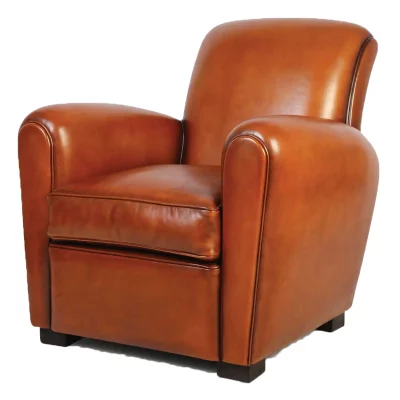
The 1950s: rebuilding and furnishing differently
After World War II, priorities were practical: homes had to be rebuilt, reorganized, and furnished again. Furniture needed to be strong, practical, and durable. The club chair perfectly met those expectations.
Models from the 1950s often kept a generous structure, but shapes gradually became lighter. Armrests were sometimes less imposing, backrests cleaner, and proportions more balanced.
Leather remained highly sought after, especially in Havana, cognac, or dark brown tones. If you would like to better understand the differences between materials, discover our page dedicated to club chair leather.
The 1960s: modern design influence
The 1960s introduced a new aesthetic. Furniture became more graphic, more minimalist, and sometimes inspired by Scandinavian design. The club chair followed this movement while keeping its identity.
At the time, we can observe:
- more visible legs, sometimes in light wood;
- slightly reclined backrests;
- lower seating positions;
- dimensions better suited to urban apartments.
The club chair became less bulky than earlier versions, while remaining a premium relaxation seat.
If you enjoy comparing silhouettes through the decades, also read our article about different club chair styles.
The 1970s: total comfort and vintage spirit
In the 1970s, comfort became the main priority again. Seats became softer, deeper, and sometimes more enveloping. The club chair found its place in warm interiors with dark wood, thick rugs, and natural materials.
Some models adopted very rounded shapes, while others moved closer to the lounge chair style. The traditional club chair then inspired freer creations.
This was also the decade when alternative coverings became more common: velvet, heavy fabrics, or pigmented leathers that were easier to maintain.
Why did the club chair survive these decades?
Between 1950 and 1970, many furniture styles disappeared or became outdated. The club chair endured for several reasons:
- its timeless comfort;
- its sturdiness;
- its ability to evolve aesthetically;
- its warm and elegant image;
- its compatibility with many interior styles.
To choose a model suited to your current home, also read our guide on how to choose the right club chair.
How to recognize a 1950 to 1970 club chair
Several clues can help date a model approximately:
- lower shapes than 1930s club chairs;
- cleaner and less decorative lines;
- modern foam replacing some traditional stuffing;
- discreet or integrated legs;
- smoother leather, sometimes pigmented.
When in doubt, manufacturing quality remains the best indicator. A genuine, well-made club chair keeps excellent structure over time.
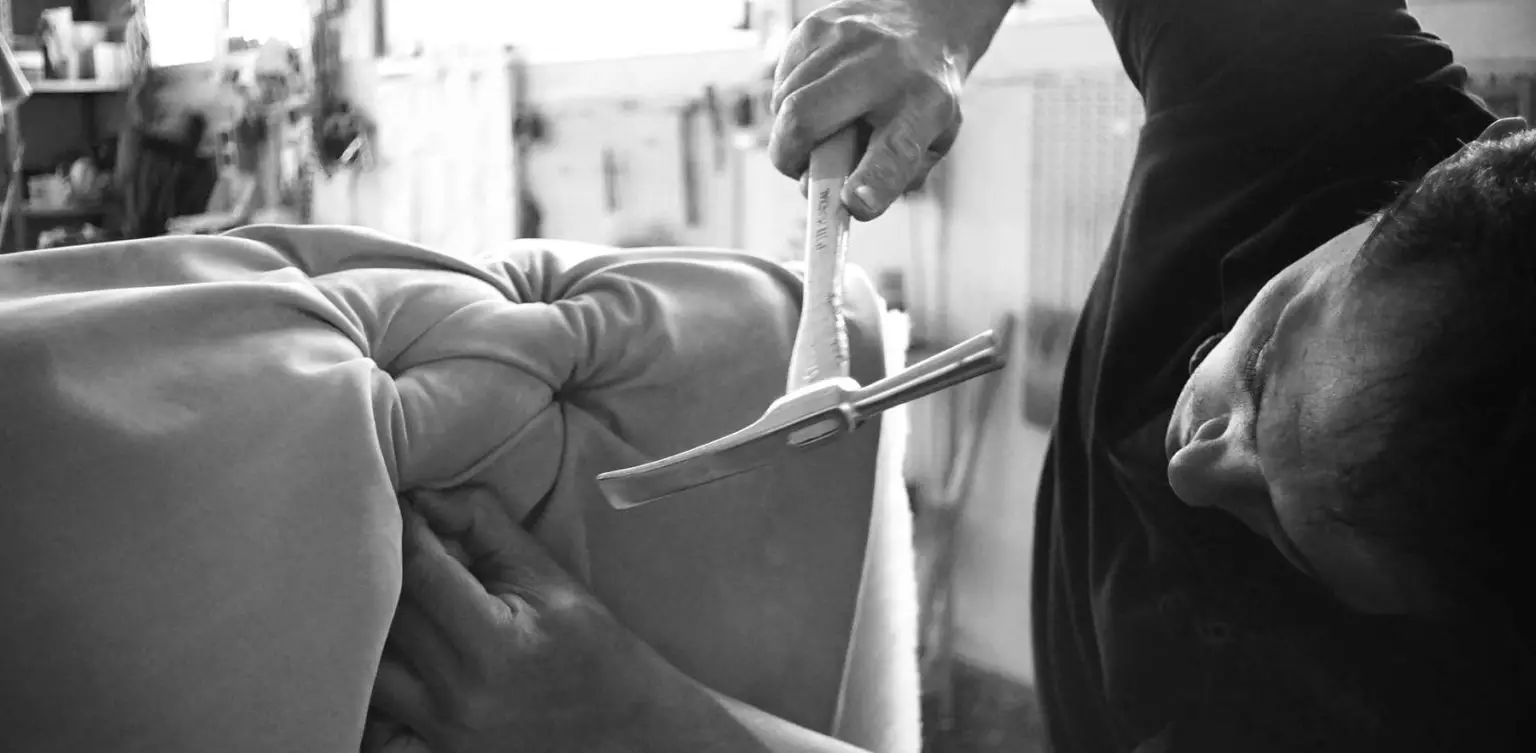
If you are considering restoration, also discover our guide on club chair manufacturing and restoration.
Today’s view of 1950–1970 models
Today, club chairs from this period are appreciated for their perfect balance between authenticity and modernity. Less imposing than older models, they fit easily into a contemporary living room, office, or library.
They are especially sought after in vintage, mid-century, or loft interiors.
FAQ – The evolution of the club chair from 1950 to 1970
Is a 1950s club chair different from older models?
Yes. It keeps the classic club chair spirit, but often with cleaner, more compact lines better suited to post-war interiors.
What leathers were used between 1950 and 1970?
Mainly durable leathers dyed in brown, cognac, or Havana shades. From the 1970s onward, pigmented finishes became more common.
Is a 1960s club chair comfortable?
Yes, often very comfortable. Seats became lower, and modern foams sometimes added extra softness.
Do these models have value today?
Yes, especially when in good condition, with original leather or high-quality restoration. Their vintage style is highly appreciated.
How can you recognize a 1970s club chair?
1970s models often feature softer lines, deeper seating, and stronger comfort-oriented shapes. Velvet or pigmented leather coverings are also common.
Where can I learn more about all club chair periods?
Our history of the club chair page traces the complete evolution of the model, from its origins to today.
Conclusion
From 1950 to 1970, the club chair proved its rare ability to evolve without losing its identity. More modern, more adaptable, and still as welcoming as ever, it crossed these decades with elegance. This stylistic flexibility explains why it remains a timeless furniture icon today.